



A note before we begin
This article is made as questions, because I can’t directly comment.
Actually, I am seeking answers.
To all voices who read this — answer me.
Jai Shri Ram…
Har Har Mahadev…
All is well… All is well…
Which mantra should I choose?
What does being spiritual really mean?
What does the word “spiritual” actually mean?
Is it about praying to God, or does it belong to something like inner peace and personal progress? From older generations to Gen Z and Gen Alpha, people chant mantras, speak about spirituality, and follow different practices. Today, even popular voices like Ranveer Allahbadia, along with thinkers such as Rajarshi Nandy, often bring spiritual conversations into modern platforms, making these ideas more visible to a wider audience. But what are people really doing when they engage with all this?
What is the role of mantras?
Are mantras a language to communicate with God, or are they simply vibrations — sounds that influence our mind and body? If it is just sound, then what exactly changes? Is it something happening outside us, or something shifting quietly within us?
What does meditation really mean?
Do we have to sit in the Himalayas, close our eyes, and chant something to become spiritual, or is meditation something else entirely?
Practices like Vipassana meditation suggest a different approach. It is less about chanting or imagining, and more about observing — observing thoughts, observing reactions, and observing ourselves as they are. In that process, the focus is not on creating something new, but on understanding what is already happening within.
So then, is spirituality about doing something, or about becoming aware of what already exists?
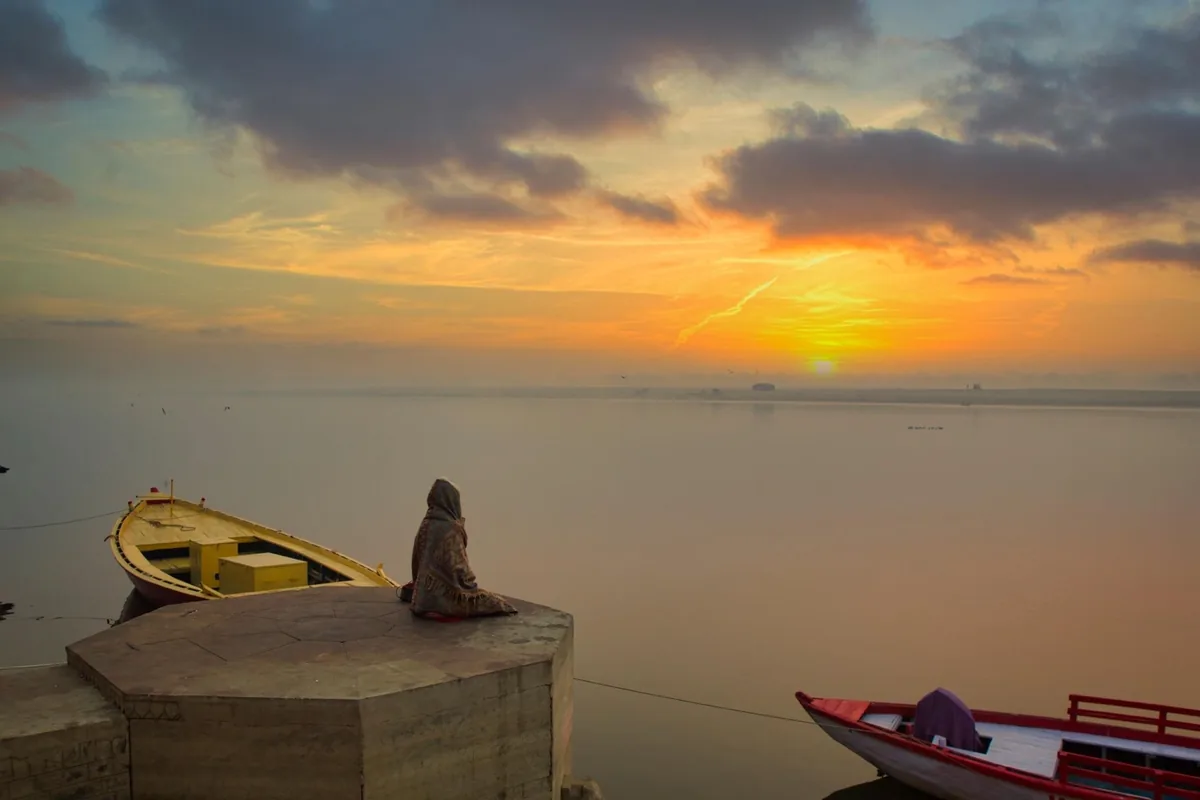
What is this journey inside?
A journey inside sounds peaceful. But in reality, it may feel like entering a dark space — almost like a black hole.
Close your eyes for a couple of seconds… it’s dark, right?
That is our own mind. A place we rarely visit properly, filled with thoughts we do not fully understand. So instead of staying there, we often look outside.
Why do we visit temples, churches, or mosques?
We go there to pray, to ask for support, and to speak to God. But then a question comes.
A human being — who is considered the most aware among all creatures — does he still need support?
If yes, then from where?
From a God with a form, or from something simpler — our own mind?
What is the idea of God?
Is God something we praise? A figure, a form, a dimension? Or is it something we try to understand through ourselves?
If we say “look within”, what does that really mean? We cannot even see our own face without a reflection. So what are we actually trying to see?
If we are able to understand ourselves clearly, is that where the purpose completes?
Is spirituality found in places?
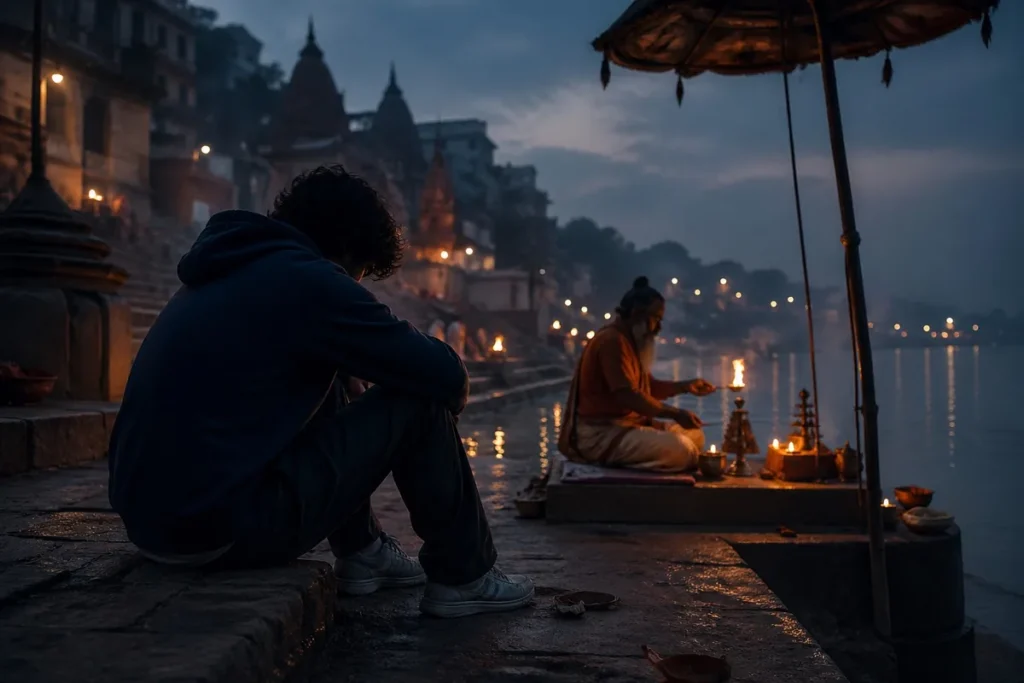
Places like Kashi are said to be spiritual. But what makes them spiritual?
Is it the place, or what we go through there?
Being in Kashi — in those areas where eyes of people float, where even pieces of a burned tongue float — does that itself give us spirituality?
You can ask me, “Did your Kumbh Mela travel give you spiritual awareness?”
My answer is: yes.
But not the spirituality that you know.
It is a place where everyone gets their own spirituality. So yes, I am spiritual.
Still, you can ask me, “What is your spirituality?”
I can’t tell.
If you really want to know that, you should travel my way — the room I stayed in, the food I ate, the people I met, the vehicles I travelled in, the laughter I created, and the tears that happened.
What happens when we lose control?
Sometimes, even your closest companion — your iPhone or your Android — could leave you. At that moment, you start realising something.
You are only your map.
So start navigating with your mouth — speak.
Does experience become awareness?
You will begin to realise the real taste of theerththam — your own sweat.
Your clean face turns dark and oily with dust.
You start realising that even the dark, even places with no people, can still support you.
So where is spirituality?
Maybe the universe is yourself.
Not just Kashi.
It is us.
Our very self.
So, what is spirituality?
It may not be something we can define. It may not be something we can explain. It has to be lived.
So the question remains — is spirituality something we follow, or something we realise through experience?
And one more thing:
Can travel itself become meditation?
Maybe it is not about reaching somewhere.
Maybe it is about what happens to us while moving.
The moments we don’t plan, the discomfort we don’t expect, the silence we don’t notice — all of it slowly begins to change something within.
And without realising it, we may already be in a state of meditation.